
Camera not working in Windows 11
A Windows 11 camera failure can come from privacy permissions, a physical shutter or hotkey, another app, security software, USB detection or the camera driver. The fastest path is to prove whether Windows itself can use the camera before changing one conferencing app.
Prove the Windows camera path
Open the Windows Camera app first. If it fails there too, check the physical shutter/hotkey, Camera privacy permissions and Device Manager before troubleshooting Zoom, Teams, Discord or a browser.
- Open Camera from Start and test for a live image.
- Open Settings > Privacy & security > Camera and enable Camera access plus the appropriate app or desktop-app access.
- Confirm any hardware shutter, privacy slider or camera hotkey is open/enabled.
- Retest before changing drivers.
Why this branch first: Microsoft recommends the Camera app and privacy controls early because they separate app-specific failures from a Windows/device problem.
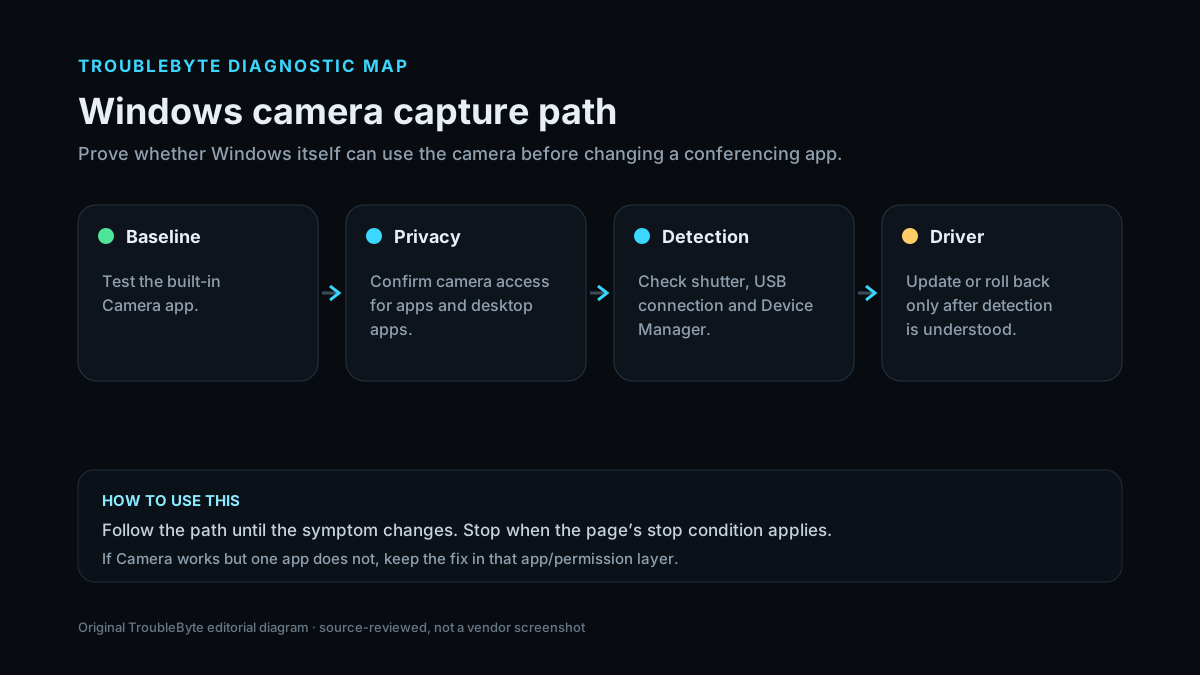
TroubleByte diagnostic path
Test the Windows Camera app.
Check device, app and desktop-app camera access.
Inspect shutter, USB connection and Device Manager.
Update or roll back only after the branch is clear.
Original TroubleByte diagnostic map. It summarizes the cited troubleshooting order; it is not a vendor screenshot.
Use the symptom to choose the next branch
Does the camera work in the Windows Camera app?
Treat the hardware/core Windows path as available and focus on the failing app, browser permission or desktop-app access.
Stay at the Windows/device layer: privacy controls, shutter/hotkey, detection and driver state.
Does Device Manager show the camera without an error?
Prefer permission/app/driver-state checks before assuming hardware failure.
Check physical connection, hardware controls and OEM driver/firmware; do not keep reinstalling the conferencing app.
Original TroubleByte decision aid derived from the cited troubleshooting scope. It does not replace vendor documentation.
What this usually means
The key branch is whether the camera works in the Windows Camera app. If it does, the hardware and core Windows capture path are probably available and the problem is app-specific permissions or configuration. If Camera fails too, inspect physical privacy controls, Windows access settings, detection and the driver before reinstalling individual apps.
What we verified from the source material
Microsoft identifies driver changes, antivirus/security software, privacy settings, application conflicts and hardware controls as common causes. Its current flow explicitly uses the Camera app to isolate app-specific failures and documents separate access controls for Store and desktop apps.
Prerequisites and checks
Prepare first
- Disconnect unnecessary USB capture devices while testing.
- Close apps that could already be using the camera.
- Know whether the camera is built in or connected over USB.
Checks that prevent the wrong fix
- Test the camera in the built-in Camera app.
- Check for a physical camera shutter, privacy switch or Fn hotkey.
- Check whether the camera appears in Device Manager before uninstalling anything.
Applies to
Solutions, in order
Prove the Windows camera path
- Open Camera from Start and test for a live image.
- Open Settings > Privacy & security > Camera and enable Camera access plus the appropriate app or desktop-app access.
- Confirm any hardware shutter, privacy slider or camera hotkey is open/enabled.
- Retest before changing drivers.
Why this can work: Microsoft recommends the Camera app and privacy controls early because they separate app-specific failures from a Windows/device problem.
Check detection and camera driver
- For a USB webcam, reseat it and try another direct USB port.
- Open Device Manager and confirm the camera is enabled and detected.
- Use Windows Update or the PC/camera manufacturer for a current driver; if the issue followed a driver change, consider rollback.
- Restart and retest in Camera before returning to the original app.
Why this can work: If Windows itself cannot use the camera, Microsoft directs users toward connection, Device Manager and driver checks.
How to know the fix actually worked
- Camera shows a stable image in the Windows Camera app.
- The original video or conferencing app can access the intended camera after permissions are restored.
Do not count a temporary disappearance of the symptom as a confirmed fix if the problem normally returns after a restart, reconnect or several minutes of use.
When not to keep changing things
- If the camera is absent from Device Manager and also fails on another known-good port/device, stop reinstalling applications and investigate hardware/OEM support.
Escalation: If the built-in camera remains absent after OEM driver and firmware checks, or a USB camera fails on another known-good computer, escalate to the device manufacturer rather than repeatedly resetting Windows.
Sources used for this record
Primary · checked Sep 7, 2026Microsoft — Camera doesn’t work in WindowsFirst-party documentation used as the primary evidence source for this troubleshooting record.Corroborating · checked Sep 7, 2026Microsoft — Manage app permissions for a camera in WindowsFirst-party documentation used as the corroborating evidence source for this troubleshooting record.Discuss this exact problem
Share what happened on your system, ask a focused follow-up question, or add evidence that may help someone with the same symptom. Community posts are separate from TroubleByte editorial verification.
Start a discussion
Revision history
Show 1 recorded revision
2026-09-07 — Created for the v0.9 launch-acceleration content pass from current first-party documentation; indexing remains disabled pending final launch review.