
Wi-Fi connected but no internet in Windows 11
“Connected, no internet” means the Wi-Fi link may be established while internet reachability still fails. Testing another device on the same network separates router or ISP trouble from a Windows-only problem before you flush DNS, renew IP settings or reset networking.
Separate network-wide from PC-only failure
Test another device on the same Wi-Fi first. If every device is offline, troubleshoot the router/ISP. If only the Windows PC is affected, check IP configuration, proxy/VPN, DNS and the adapter before using Network reset.
- Test the same Wi-Fi from another phone or computer.
- If all devices fail, restart the modem/router if you administer it and check ISP status.
- If only Windows fails, forget/reconnect to the Wi-Fi and inspect IP configuration.
- Disable an unnecessary manual proxy or VPN temporarily for diagnosis.
Why this branch first: Microsoft recommends determining whether the problem is the network or the Windows device before resetting local configuration.
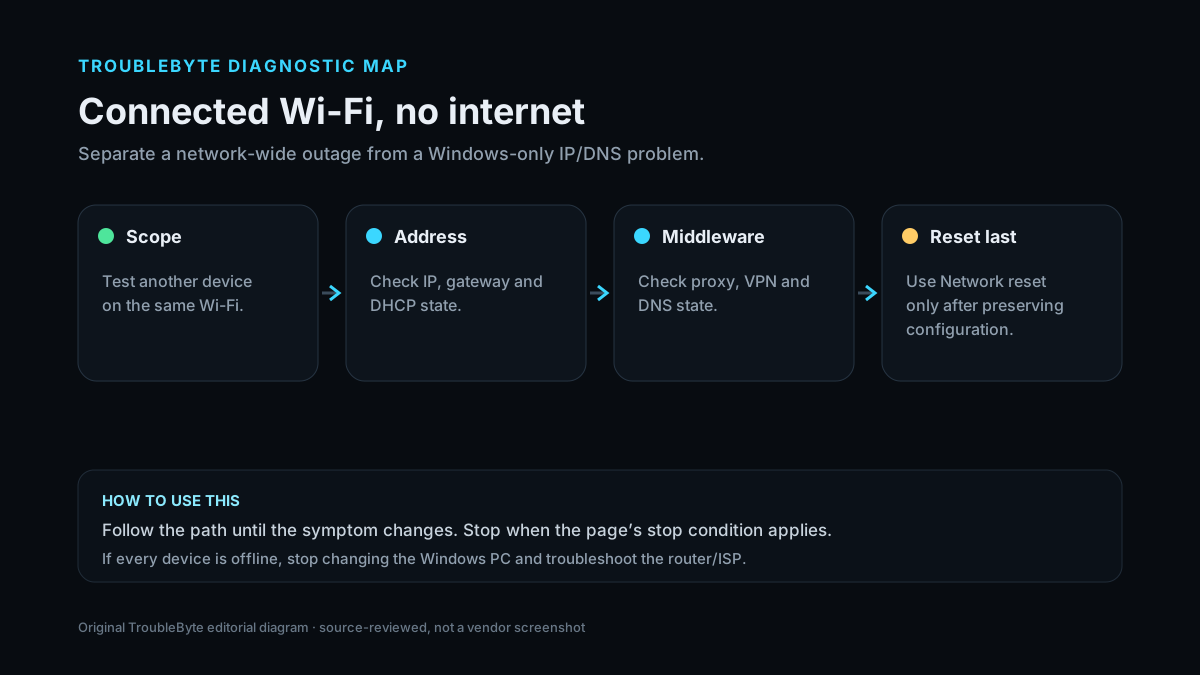
TroubleByte diagnostic path
Test another device on the same network.
Check IP, gateway and DHCP state.
Check proxy/VPN and DNS state.
Use Network reset only after preserving configuration.
Original TroubleByte diagnostic map. It summarizes the cited troubleshooting order; it is not a vendor screenshot.
Use the symptom to choose the next branch
Can another device access the internet on the same Wi-Fi?
The router/upstream link is probably usable; focus on this Windows device’s IP, DNS, proxy/VPN and adapter.
Stop changing the Windows PC and troubleshoot the router, modem or ISP first.
Does ipconfig show a 169.254.x.x address or no normal default gateway?
Prioritize DHCP/link/router communication and lease renewal rather than DNS-only changes.
The PC has local addressing; investigate DNS, proxy/VPN and upstream reachability.
Original TroubleByte decision aid derived from the cited troubleshooting scope. It does not replace vendor documentation.
What this usually means
A successful Wi-Fi association only proves the local radio link, not internet connectivity. Microsoft’s flow separates network-wide failure from a device-specific problem, then checks address assignment, gateway/DNS, proxy and adapter state. A 169.254.x.x address is especially useful evidence that Windows did not receive a normal DHCP lease.
What we verified from the source material
Microsoft’s Windows networking guidance explicitly separates connection-to-router from internet reachability and documents gateway/IP checks, 169.254 automatic addressing, DNS/IP repair, proxy checks and Network reset as a later recovery step.
Prerequisites and checks
Prepare first
- Know whether the network works for another device.
- Avoid resetting the router if you do not administer the network.
- Record current static IP/VPN settings before changing them.
Checks that prevent the wrong fix
- Test internet access on another device using the same Wi-Fi.
- Run ipconfig and note whether the PC has a normal gateway and address rather than 169.254.x.x.
- Check whether a VPN or manual proxy is active.
Applies to
Solutions, in order
Separate network-wide from PC-only failure
- Test the same Wi-Fi from another phone or computer.
- If all devices fail, restart the modem/router if you administer it and check ISP status.
- If only Windows fails, forget/reconnect to the Wi-Fi and inspect IP configuration.
- Disable an unnecessary manual proxy or VPN temporarily for diagnosis.
Why this can work: Microsoft recommends determining whether the problem is the network or the Windows device before resetting local configuration.
Repair Windows IP/DNS state before Network reset
- Open an elevated terminal and inspect ipconfig output for gateway/DHCP clues.
- Renew the IP lease and flush the DNS resolver cache when local state appears stale.
- Restart the adapter/PC and retest.
- Use Settings Network reset only after preserving VPN/static settings and simpler steps fail.
Why this can work: Microsoft documents IP renewal, DNS flushing and Network reset, but Network reset should be a later step because it removes adapter configuration.
How to know the fix actually worked
- Windows no longer reports No internet and can reach multiple unrelated websites/services.
- The PC has a normal local address and default gateway appropriate for the network.
Do not count a temporary disappearance of the symptom as a confirmed fix if the problem normally returns after a restart, reconnect or several minutes of use.
When not to keep changing things
- If every device on the same network is offline, stop changing Windows adapter settings and troubleshoot the router, upstream connection or ISP.
Escalation: If only the Windows device fails after adapter/driver and network reset, collect ipconfig and network diagnostic output before escalating to the PC or network administrator.
Sources used for this record
Primary · checked Sep 7, 2026Microsoft — Fix Wi-Fi connection issues in WindowsFirst-party documentation used as the primary evidence source for this troubleshooting record.Corroborating · checked Sep 7, 2026Microsoft — Fix Ethernet connection problems in WindowsFirst-party documentation used as the corroborating evidence source for this troubleshooting record.Discuss this exact problem
Share what happened on your system, ask a focused follow-up question, or add evidence that may help someone with the same symptom. Community posts are separate from TroubleByte editorial verification.
Start a discussion
Revision history
Show 1 recorded revision
2026-09-07 — Created for the v0.9 launch-acceleration content pass from current first-party documentation; indexing remains disabled pending final launch review.