
Cloudflare Error 525: SSL handshake failed
Cloudflare Error 525 is an origin-side TLS handshake failure while Full or Full (Strict) encryption is in use. Confirm the origin is actually serving HTTPS on the expected port and hostname, then inspect SNI/cipher/certificate configuration instead of changing browser settings.
Restore a successful TLS handshake at the origin
Test HTTPS directly at the origin using the correct hostname/SNI. Confirm port 443 is open and the origin can complete a TLS handshake with compatible protocols/ciphers before changing Cloudflare encryption mode.
- Confirm the origin web server is listening on HTTPS port 443 or the configured supported HTTPS port.
- Test the origin with the production hostname/SNI, not only by IP.
- Inspect certificate presentation and server TLS configuration.
- Confirm the origin supports cipher/protocol combinations compatible with Cloudflare.
Why this branch first: Cloudflare lists missing/invalid origin TLS service, closed secure port, SNI and cipher mismatch among common 525 causes.
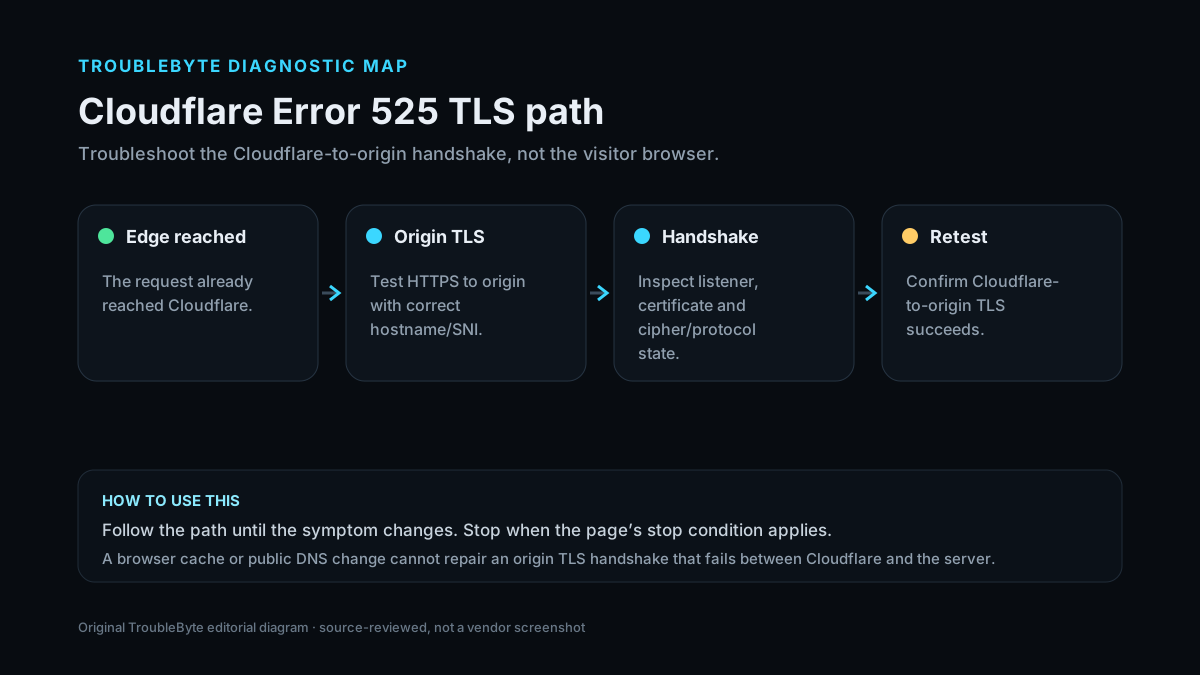
TroubleByte diagnostic path
Visitor already reached Cloudflare.
Test HTTPS to the origin with correct SNI.
Inspect port, certificate and cipher/protocol state.
Confirm Cloudflare-to-origin TLS succeeds.
Original TroubleByte diagnostic map. It summarizes the cited troubleshooting order; it is not a vendor screenshot.
Use the symptom to choose the next branch
Can the origin complete HTTPS/TLS directly with the production hostname and SNI?
Compare Cloudflare-compatible TLS/cipher requirements and origin logs at the failing timestamp.
Fix the origin HTTPS listener/certificate/SNI path first; Cloudflare cannot complete a handshake that the origin itself cannot serve.
Is the origin certificate valid but the handshake still fails?
Inspect SNI support, supported protocols/ciphers and origin TLS logs rather than certificate validity alone.
Correct origin certificate/presentation and retest the handshake before changing application code.
Original TroubleByte decision aid derived from the cited troubleshooting scope. It does not replace vendor documentation.
What this usually means
Error 525 occurs between Cloudflare and the origin, after the visitor has already reached Cloudflare. Cloudflare documents it when the origin TLS handshake fails under Full or Full (Strict). The diagnostic target is therefore origin HTTPS: listener/port, SNI, certificate presentation and compatible cipher/protocol configuration—not the visitor’s browser cache or public DNS resolver.
What we verified from the source material
Cloudflare defines Error 525 as a TLS handshake failure between Cloudflare and the origin when Full or Full (Strict) is configured. Its current documentation lists origin certificate/TLS availability, secure port, SNI and cipher compatibility among common causes.
Prerequisites and checks
Prepare first
- Have origin-server access or hosting-provider support.
- Know the intended origin hostname/IP and TLS listener.
- Do not weaken encryption mode permanently just to hide the symptom.
Checks that prevent the wrong fix
- Confirm Cloudflare SSL/TLS mode is Full or Full (Strict).
- Test the origin on HTTPS/443 with the correct hostname/SNI.
- Check origin TLS logs for handshake/cipher/SNI failures at the timestamp of a 525.
Applies to
Solutions, in order
Restore a successful TLS handshake at the origin
- Confirm the origin web server is listening on HTTPS port 443 or the configured supported HTTPS port.
- Test the origin with the production hostname/SNI, not only by IP.
- Inspect certificate presentation and server TLS configuration.
- Confirm the origin supports cipher/protocol combinations compatible with Cloudflare.
Why this can work: Cloudflare lists missing/invalid origin TLS service, closed secure port, SNI and cipher mismatch among common 525 causes.
Use Cloudflare mode changes only as controlled diagnosis
- Confirm whether Full or Full (Strict) is currently configured.
- If a temporary mode change is used for diagnosis, document it and restore the intended secure mode after the origin is fixed.
- Prefer a valid public or Cloudflare Origin CA certificate and correct SNI at the origin.
- Retest through Cloudflare after origin HTTPS succeeds directly.
Why this can work: Changing SSL mode can alter validation requirements but should not replace fixing an origin that cannot complete TLS.
How to know the fix actually worked
- The origin completes a TLS handshake for the production hostname.
- Cloudflare requests return the application response without Error 525.
Do not count a temporary disappearance of the symptom as a confirmed fix if the problem normally returns after a restart, reconnect or several minutes of use.
When not to keep changing things
- If you do not control the origin server, stop random Cloudflare setting changes and provide the hosting provider with timestamps, hostname and 525 details.
Escalation: If direct origin TLS works with correct SNI but Cloudflare still receives 525, collect origin TLS logs and Cloudflare error timestamps for hosting/Cloudflare support.
Sources used for this record
Primary · checked Sep 7, 2026Cloudflare — Error 525First-party documentation used as the primary evidence source for this troubleshooting record.Corroborating · checked Sep 7, 2026Cloudflare — SSL/TLS encryption modesFirst-party documentation used as the corroborating evidence source for this troubleshooting record.Discuss this exact problem
Share what happened on your system, ask a focused follow-up question, or add evidence that may help someone with the same symptom. Community posts are separate from TroubleByte editorial verification.
Start a discussion
Revision history
Show 1 recorded revision
2026-09-07 — Created for the v0.9 launch-acceleration content pass from current first-party documentation; indexing remains disabled pending final launch review.